Best Apps to Learn Swedish in 2026, Tested and Ranked
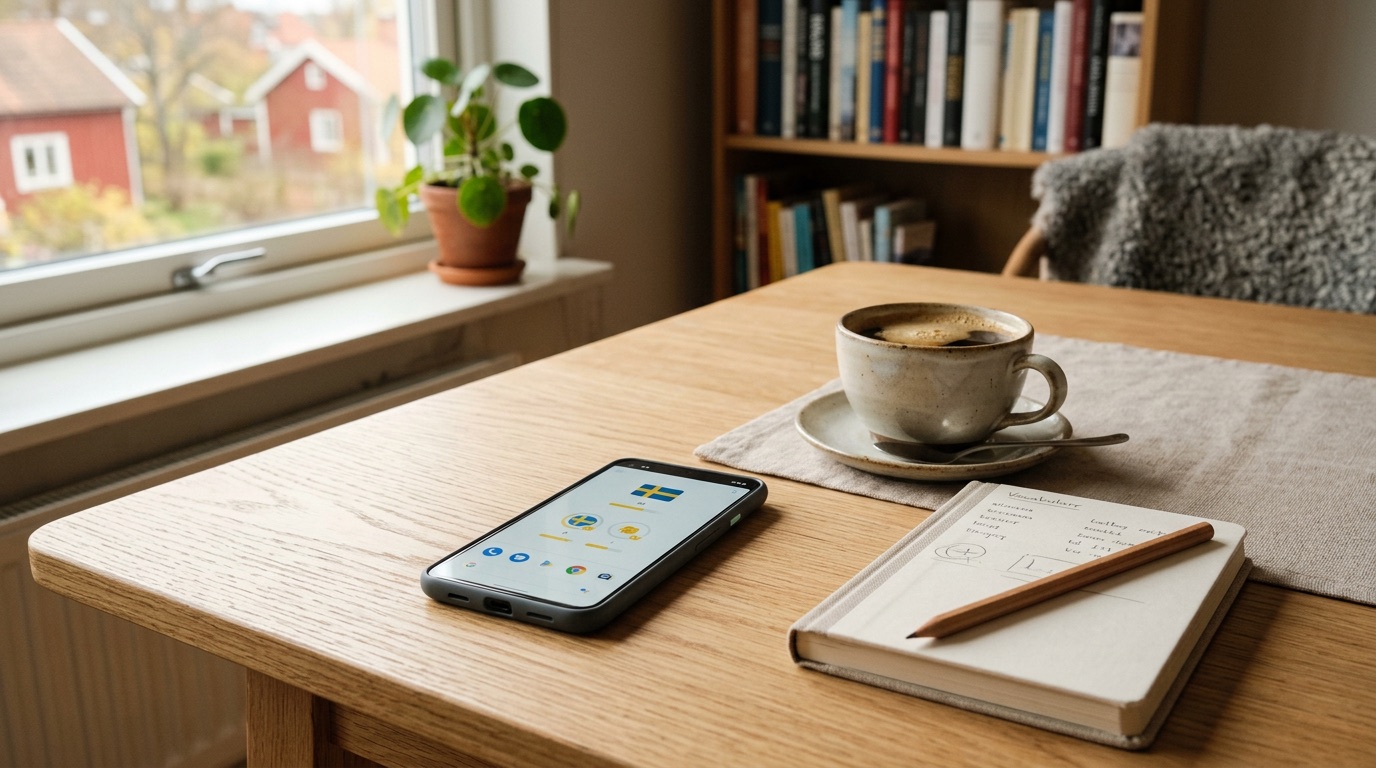
There is no shortage of language apps, but only a handful do anything real for Swedish. Swedish is friendlier than its Nordic neighbours — but it still has its own puzzles: the en/ett genders, V2 word order that flips the verb to second place, the notorious sj- and tj-sounds, and a gentle pitch accent that makes anden (the duck) and anden (the spirit) two different words. An app that ignores all that gives you a streak and very little Swedish. We tested the main options against what actually matters: real speaking practice, clear grammar, spoken Swedish, and vocabulary that sticks. Here is how they compare.
Quick pick
- Best overall for Swedish: SvenskaSpeak
- Best for a daily habit: Duolingo
- Best structured beginner course: Babbel
- Best for pure audio/speaking: Pimsleur
- Best for advanced vocabulary: Clozemaster
- Fine for a first taste: Mondly
S1. SvenskaSpeak
The one app built only for Swedish, from your first word to real conversations.
Key features
- Full A1–C1 coverage — most apps quietly stall at A2. SvenskaSpeak keeps going all the way to advanced, so you do not outgrow it in a month.
- Real speaking practice — pronunciation and speaking exercises that listen to your voice and check you, instead of just reading and tapping. This is the rep almost every other app skips.
- Grammar that finally makes sense — focused drills on the parts of Swedish that actually trip people up: en/ett, V2 word order and the verb groups, with clear examples rather than a wall of rules.
- Image + native-audio vocabulary — 8,000+ words, each with a real photo and natural native audio, taught in a sensible order with spaced repetition so they stick.
- Duolingo-style gamification — streaks, XP, daily goals and weekly leaderboards keep you coming back, built on top of a genuinely deep Swedish course.
- Everything in one place — graded lessons, listening, speaking, grammar and review, so you are not stitching five apps together.
✅ Pros
- The only app designed around Swedish specifically, not a template
- Goes all the way from A1 to C1 — nowhere else to graduate to
- Real speaking and pronunciation practice, not just tapping
- Clear grammar on en/ett, word order and verbs
- Large image + native-audio vocabulary, and it is affordable
❌ Cons
- Swedish only, so no use if you also want other languages
- Newer than Duolingo, so a smaller community
- Rewards daily consistency — it will not do the work for you
If you only install one thing, make it this. SvenskaSpeak covers the parts of Swedish that everyone stumbles on — the genders, the word order, the sounds and speaking out loud — and makes them approachable with images, audio and the kind of daily gamification that actually builds a habit. It is the rare app that stays useful from your very first hej all the way to a real B2–C1 conversation.
D2. Duolingo
The friendliest way to build a daily habit, if you know its limits.
Key features
- Gamification done best — streaks, hearts, leagues and reminders that genuinely keep you opening the app.
- Bite-sized lessons — short, low-pressure, easy to fit into a coffee break.
- Free — the whole Swedish course is usable without paying.
✅ Pros
- Unbeatable for forming a daily habit
- Free and beginner-friendly
- Polished and fun
❌ Cons
- The Swedish tree tops out around A2
- Barely explains grammar — you infer it
- Little real speaking practice
- Streaks can flatter your actual level
Duolingo is the best habit app and a fine warm-up, but it treats Swedish like every other course and runs out of road early. Use it to show up daily, and pair it with something that actually teaches the grammar and speaking it skips.
B3. Babbel
A structured, grammar-aware course, if you don't mind paying.
Key features
- Real grammar explanations — each lesson tells you why, not just what, which Duolingo rarely does.
- Practical dialogues — built around realistic everyday situations.
- Clear A1–B1 progression — methodical and easy to follow, with speech-recognition feedback.
✅ Pros
- Better grammar coverage than Duolingo
- Well-structured, practical lessons
- Pronunciation feedback built in
❌ Cons
- Subscription-only, no meaningful free tier
- Swedish course is thinner than its Spanish or French
- Vocabulary caps around 3,000 words — not enough for B2+
- Less engaging, so consistency can slip
A solid, serious course for reaching B1 with real grammar understanding. The ceiling and the price are the catch — you will need something deeper (and cheaper) to go beyond intermediate.
P4. Pimsleur
Audio-first lessons that get you speaking and listening.
Key features
- 30-minute audio lessons — listen-and-repeat drills that build a real feel for Swedish sound and rhythm.
- Hands-free by design — learn while walking, driving or cooking.
- Strong pronunciation focus — you speak constantly.
✅ Pros
- Genuinely improves speaking and accent
- Great for commutes and multitasking
- Proven spaced-repetition method
❌ Cons
- Expensive
- No reading, writing or grammar depth
- Small vocabulary (~800 words)
- Three levels only reach A2
Excellent for the ear and the mouth, weak on everything else. A strong companion for pronunciation, not a complete course on its own — pair it with a visual vocabulary app.
M5. Mondly
Polished vocabulary practice for a first taste.
Key features
- Clean, visual lessons — tidy interface with pictures, voice recognition and even AR.
- Themed vocabulary sets — colours, numbers, family, food.
✅ Pros
- Looks good and is easy to start
- Handy for a few travel phrases
❌ Cons
- Very shallow for Swedish specifically
- Repetitive, little grammar
- Free tier is heavily limited
Fine for learning fifty phrases before a trip to Stockholm, but it will not take you far into real Swedish.
C6. Clozemaster
A firehose of authentic sentences for advanced vocabulary.
Key features
- Fill-in-the-blank on real sentences — one word is removed from an authentic Swedish sentence and you supply it, in context.
- Enormous corpus — over 100,000 sentences, far beyond any curated course.
- Genuinely useful free tier — you can do a lot without paying.
✅ Pros
- Unmatched vocabulary range
- Real usage in context
- Excellent for pushing B1 to C1
❌ Cons
- No structure or grammar teaching — wrong for beginners
- Bare, unengaging interface
- Needs an existing foundation to be useful
Once you already have a foundation, nothing else expands your Swedish vocabulary this fast. Just don't start here — build the basics first, then let Clozemaster loose.
Our recommendation by learner type
- You want to genuinely learn Swedish: start with SvenskaSpeak, and lean on its grammar drills and speaking practice.
- You want a daily streak and gentle start: add Duolingo on top for the habit.
- You prefer structured, explained lessons: Babbel to B1, then something deeper.
- You mostly learn by ear on the go: add Pimsleur for listening and pronunciation.
- You are already intermediate: pair SvenskaSpeak's C1 content with Clozemaster for vocabulary.
- You just need a few travel phrases: Mondly or Duolingo will do.
The honest verdict
No single app takes you from zero to fluent Swedish on its own. The learners who move fastest combine a primary vocabulary-and-grammar tool with regular listening to Swedish media — radio, podcasts, TV — and, ideally, occasional conversation with a native speaker. Apps are scaffolding; the real acquisition happens when you start consuming and producing Swedish in as natural a context as possible.
That said, if you can only use one, SvenskaSpeak's A1–C1 coverage, grammar drills, speaking practice and 8,000+ word vocabulary make it the most complete single tool available for Swedish in 2026.
Learn Swedish the way it is actually spoken
SvenskaSpeak brings real grammar, speaking practice and an image + audio vocabulary into one app — free to start.
Frequently Asked Questions
What is the best app to learn Swedish?
For serious learners who want to progress beyond the basics, SvenskaSpeak is the most comprehensive option — covering 8,000+ words from A1 to C1 with grammar drills and speaking practice. For absolute beginners who want a free starting point, Duolingo is accessible but tops out at around A2 level. The best app depends on your current level and goals.
Is Duolingo good for Swedish?
Duolingo is a decent starting point for Swedish beginners — it's free, gamified, and teaches basic vocabulary and phrases. However, it has significant limitations: the Swedish course stops at roughly A2 level, grammar explanations are minimal, and it doesn't prepare you well for real conversation. It's best used as a supplement or for the first few weeks, not as a primary learning tool for anyone serious about Swedish.
How long to become conversational in Swedish with an app?
With consistent daily use (30–45 minutes per day) of a comprehensive app like SvenskaSpeak, most English speakers can reach basic conversational ability (A2–B1) within 4–8 months. Reaching comfortable conversational fluency (B2) typically takes 12–18 months of consistent study combined with listening practice and ideally some conversation with native speakers.