Learn Swedish Vocabulary Visually: Why Pictures Beat Word Lists

The problem with Swedish word lists
Swedish is friendly to English speakers — hus, hand, vatten, sommar are easy to spot. But a bare bilingual list still hides the one thing Swedish makes you choose: is it en or ett? A list that says "bord = table" leaves out that it is ett bord, and that gap shows up the moment you make it definite (bord→bordet).
Lists also miss false friends. bra means good, not bra. gift means married (or poison), not gift. The word list makes everything look flat and easy, then the tricky ones ambush you.
What dual coding actually says
Memory research points to a simple idea called dual coding: a word encoded as sound and as an image is remembered far better than a word tied only to a translation. The picture is a second, sturdier hook.
Be honest about the limit, though. Dual coding will not make Swedish grammar effortless — the en/ett split and the pitch accent still take practice. But if you are putting in the time anyway, meeting a word inside a real scene beats staring at a column of nouns.
Pictures also help with en and ett
Here is where visual learning quietly earns its keep in Swedish. When you always see ett kylskåp in the same kitchen, spoken with its article, the en/ett choice rides along with the picture instead of being a separate fact to memorise.
That is the idea behind learning by scene: you explore a room and pick up the words — and whether they take en or ett — where they actually live, the way you will really use them in a real Swedish kitchen.
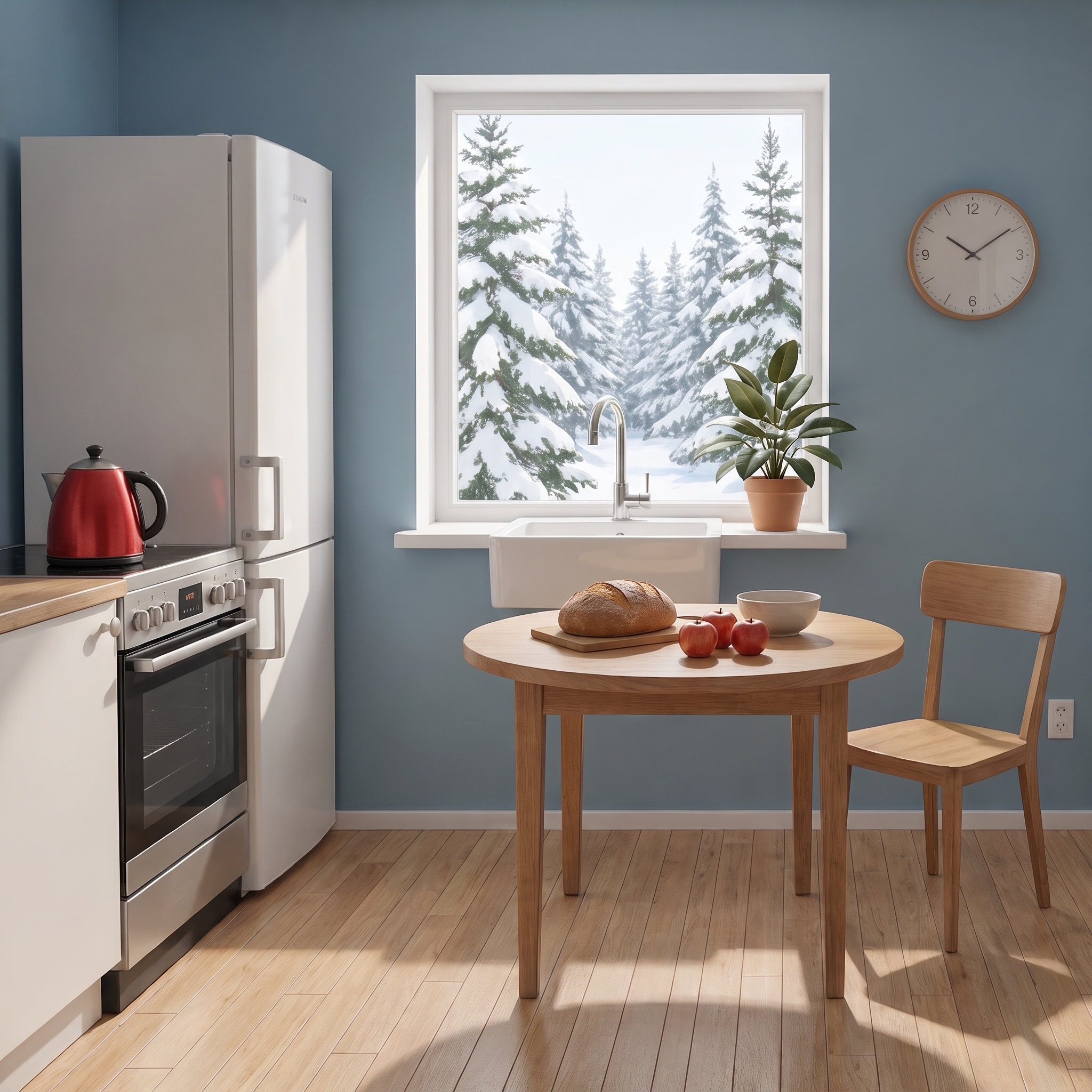
This is exactly how SvenskaSpeak's Picture Scenes work: tap any object in a detailed everyday scene to hear its Swedish name, then find it and say it. kitchen · köket
Explore Picture Scenes →A simple visual routine
You do not need an app. Put sticky notes on things at home — two colours, one for en-words and one for ett-words — so the article is baked into the picture. Group new words by place, not alphabetically.
If you want that built for you, Picture Scenes does it: 68 scenes, 660+ everyday words, each proofread by native speakers and shown in context. But the principle matters more than the tool — attach every Swedish word to a picture and its article, and both will stick.
Learn Swedish words — and en/ett — in context
SvenskaSpeak pairs every word with native audio, example sentences and picture scenes, so both the word and its article stick. Free to start.
Frequently asked questions
Does visual learning help with Swedish en and ett?
Yes. Seeing a noun repeatedly in the same scene, spoken with its article, ties the en/ett choice to the image, so you learn the word and its gender together instead of as two separate facts. About 75% of Swedish nouns are en-words, but exposure is what makes each one automatic.
How many Swedish words do I need to know?
Around 800–1,000 common words cover everyday situations, and roughly 2,500–3,000 gets you comfortable with ordinary conversation and media. Learn high-frequency, concrete words first — and note en or ett with each.
What is the fastest way to remember Swedish words?
Meet each word in context with its article, hear it spoken, say it out loud, and review on a spacing schedule. Context plus audio plus active recall beats silent list-reading.